

A credit score is important, but it is not a verdict on whether you deserve to own a home. It is one piece of a larger mortgage picture. Before you spend months trying to reach an arbitrary number, it makes sense to find out what your current score actually allows—and which changes would matter most.
What does a real mortgage comparison look like?
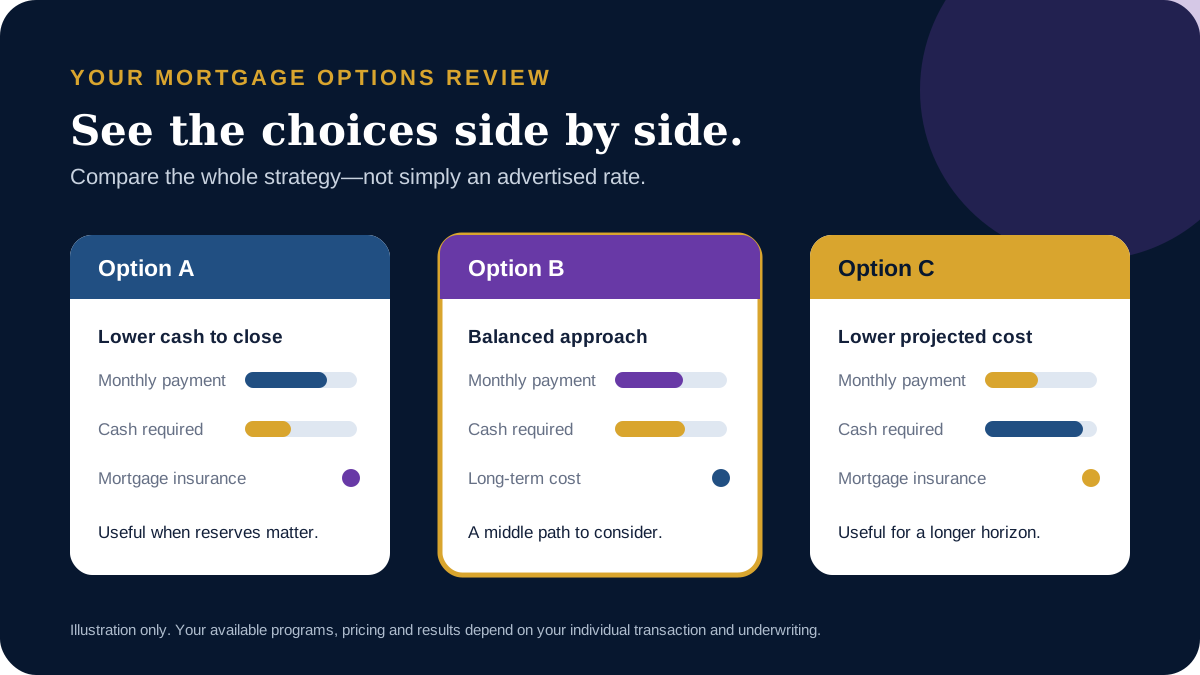
A useful comparison puts the estimated payment, cash to close, mortgage insurance and projected cost of the available strategies in one place. Mike uses Mortgage Coach to make those tradeoffs easier to see and discuss.
Why the number is not the whole answer
A credit score is one part of risk assessment. Underwriting can also consider housing history, collections, charge-offs, disputed accounts, bankruptcy, foreclosure, debt load, reserves and the automated underwriting result. Two borrowers with the same score can receive different outcomes.
FHA credit scores
HUD policy permits maximum FHA financing when the applicable decision score is at least 580. Mike’s minimum is 580; financing below 580 is not offered through Mike. Many lenders impose higher minimums, and meeting a score threshold does not guarantee approval.
VA credit scores
VA does not establish a universal minimum credit score. The lender may set its own requirement. VA underwriting also pays attention to the borrower’s income, credit history and residual income after major obligations. A veteran should not assume one lender’s minimum represents the entire VA market.
Conventional credit
Conventional eligibility and pricing are sensitive to the complete risk profile. Low-down-payment options exist for eligible borrowers, but credit can affect interest-rate adjustments and mortgage-insurance cost. A higher score may improve the structure even when the borrower already qualifies.
What to do before applying
Review all three credit reports, dispute genuine errors through the appropriate process, keep revolving balances controlled and avoid opening unnecessary accounts before closing. Do not pay collections or close accounts solely because generic advice says to do so; those actions can have unexpected underwriting or score effects. Review the actual report with a mortgage professional first.
A denial may not be the end
One lender’s overlays, program menu or underwriting approach may differ from another’s. A scenario-first review can identify whether another loan type, additional documentation, a modest down-payment change or time to rebuild credit creates a better path.
Frequently asked questions
Can I buy a Michigan house with a 580 score?
Potentially. HUD permits maximum FHA financing at 580, but lender overlays and full underwriting still apply.
Does VA require a 620 score?
VA itself does not set a universal minimum score, although many lenders establish their own minimums.
Will checking mortgage options ruin my credit?
Credit inquiries can affect scores, but consumer-protection guidance recognizes special treatment for mortgage shopping within a limited period. Ask how the lender will check credit.
Should I pay every collection before applying?
Not automatically. Review the account, program rules, available funds and likely scoring impact before taking action.
Authoritative sources
Sources were reviewed September 2, 2026. Guidelines, lender overlays, limits and program availability can change.
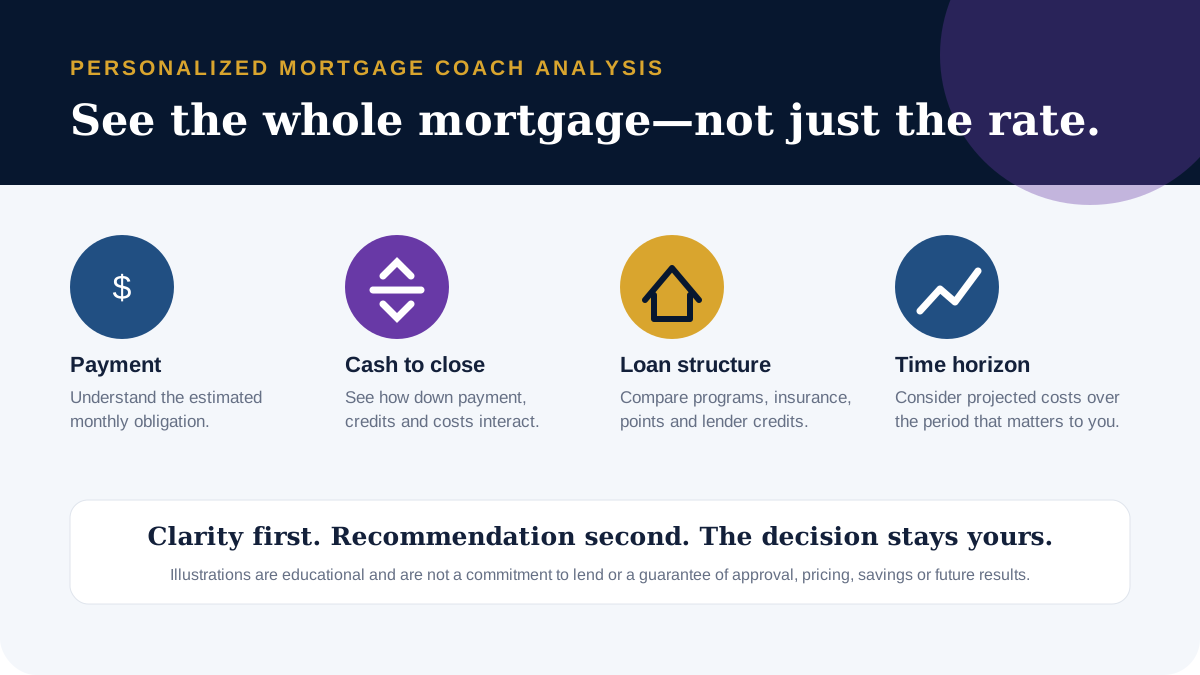
Would it help to see the options side by side?
The goal is not to squeeze you into a particular mortgage. It is to help you see the available paths clearly enough to make a confident decision. Generic advice cannot account for your income, credit, property, down payment and plans. Mike can compare the mortgage options that appear available, explain the tradeoffs in plain English and let you decide what feels right.
No pressure. No manufactured urgency. Just a useful second set of eyes before you commit to one of the biggest financial decisions you will make.