Michigan VA home financing · Mike Alkema · NMLS #642953
VA Loans in Michigan: Eligibility, Appraisal, Closing Costs & Home Buying Strategy
You earned the benefit. Your financing should be explained clearly and structured by someone who understands VA eligibility, entitlement, appraisal requirements, seller credits and the realities of competing for a home in Michigan.
Does a VA Certificate of Eligibility mean my loan is approved?
No. A Certificate of Eligibility documents eligibility for the VA home loan benefit. The lender still reviews credit, income, occupancy and the property. Before an offer, I would also look at available entitlement, closing costs, any funding-fee exemption and the complete monthly payment.
Updated October 7, 2026. Educational information; borrower, property and lender review determines eligibility.
VA benefit eligibility and loan approval are separate steps. Review entitlement, lender requirements, closing cash, appraisal and the offer. Borrower, property and lender requirements still apply.
Before your Michigan VA offer: five questions to settle
I want you and your Realtor to know what is ready, what is still conditional and what needs a property-specific answer before the offer goes in.
Benefit and loan review: Has the Certificate of Eligibility been reviewed, and what borrower documentation or underwriting conditions remain? Benefit eligibility and loan approval are separate.
Property: Does the home’s type or condition raise financing questions? Arrange an independent inspection; the VA appraisal does not replace it.
Cash: What do you expect to pay for earnest money, inspections, closing costs and prepaid taxes or insurance? Confirm which credits apply and how any funding fee is handled.
Value and contract: What happens if the appraisal is below the contract price? Discuss the VA escape clause and contract protections with your lender and Realtor before signing.
Timing: Which milestones remain for appraisal, title, underwriting and closing? Plan around the actual file rather than another borrower’s timeline.
Reviewed September 16, 2026. Educational guidance; loan eligibility and terms require borrower, property and lender review.
Potential 0% down
Eligible borrowers may be able to purchase with no down payment, subject to entitlement, appraised value, qualification and current lender and VA requirements.
VA-backed purchase loans generally do not require monthly PMI or FHA-style MIP, though a one-time VA funding fee may apply unless the borrower is exempt.
Competitive offer planning
A VA offer can be strong when the buyer, mortgage professional and real estate agents understand the program and set expectations early.
Reusable benefit
Many eligible borrowers can use their VA home loan benefit more than once, depending on entitlement, prior VA loans and the current Certificate of Eligibility.
Start with eligibility
What a Certificate of Eligibility tells us.
A Certificate of Eligibility, commonly called a COE, confirms that the Department of Veterans Affairs recognizes your eligibility for the home loan benefit based on service history and duty status. Veterans, active-duty service members, certain National Guard and Reserve members, and some surviving spouses may qualify.
The COE is important, but it is not a loan approval. A lender must still review credit, income, debts, occupancy, the property and other underwriting requirements. I can often request a COE through the VA’s lender system, or you can request one directly through VA.gov.
If you have used a VA loan before, the COE also helps us understand whether prior entitlement has been restored or whether remaining entitlement may be available. Do not assume that an existing VA loan automatically prevents another VA purchase; the actual entitlement calculation needs to be reviewed.
An eligible VA buyer may be able to purchase without a down payment when the price does not exceed the VA appraised value and entitlement, borrower qualification and lender requirements are satisfied. That can preserve cash, but we still need to plan for items such as earnest money, inspections, prepaid taxes and insurance, and any closing costs that are not covered by credits.
VA-backed purchase loans generally do not require monthly private mortgage insurance. That can materially change the monthly-payment comparison against some conventional or FHA options, but it does not make VA automatically best in every situation. We should compare the complete payment, cash-to-close, rate, fees and long-term plan.
Your maximum purchase strategy should be based on a comfortable payment and realistic closing budget—not simply the largest amount a guideline might allow.
Funding fee and closing costs
Know what is financed, paid and potentially exempt.
The VA funding fee is generally a one-time charge that supports the VA home loan program. Whether it applies and how much it is can depend on the loan type, down payment and whether the benefit has been used before. The funding fee can generally be paid at closing or financed into the loan.
Some borrowers are exempt. Examples can include certain Veterans receiving or eligible to receive VA disability compensation, qualifying surviving spouses receiving Dependency and Indemnity Compensation, certain service members with a qualifying pre-discharge rating, and active-duty Purple Heart recipients who provide the required evidence by closing. Exemption status should be verified rather than assumed.
VA permits negotiation of many closing costs. Sellers or builders may provide credits for allowable costs, and seller concessions are treated separately under VA rules. The official VA guidance generally limits seller concessions to 4% of the home’s reasonable value. The contract must still be structured around the actual allowable charges, credits and current requirements.
Value, minimum property requirements and realistic expectations.
The VA appraisal serves two important purposes: estimating the property’s market value and identifying readily apparent conditions related to VA minimum property requirements. Those requirements are intended to help ensure the property is safe, structurally sound and sanitary.
A VA appraisal is not a complete home inspection and does not guarantee a property’s condition. The appraiser does not perform all the operational checks a home inspector may perform. Buyers should consider an independent inspection and discuss appropriate contract protections with their real estate agent.
Not every imperfect property fails VA requirements. Cosmetic items, ordinary wear and minor deferred maintenance are different from conditions that affect safety, structural soundness or sanitation. When a repair is required, we need to understand who can complete it, when it must be completed and how that timing affects the contract.
If the appraised value creates a problem, there may be ways to respond depending on the evidence, contract and transaction. See my guide to options after a low appraisal.
Offer strategy
A VA offer can compete when the team is prepared.
Some sellers and agents still misunderstand VA financing. A strong offer begins with a real pre-approval, a reviewed COE, verified documentation and a lender who can explain the financing clearly without making promises the file cannot support.
I work with buyers and Realtors to identify avoidable issues before an offer is written. That can include reviewing entitlement, discussing the target property type, estimating cash-to-close, setting appraisal expectations and communicating realistic timing to the agents.
The goal is not to make the VA loan look like something it is not. The goal is to show that the buyer and financing are organized, understood and supported by direct communication.
Real estate professionals can also visit my Realtor partner page for information about working together on difficult or time-sensitive files.
Real-world execution
A documented Michigan VA purchase: preparation and clear-to-close.
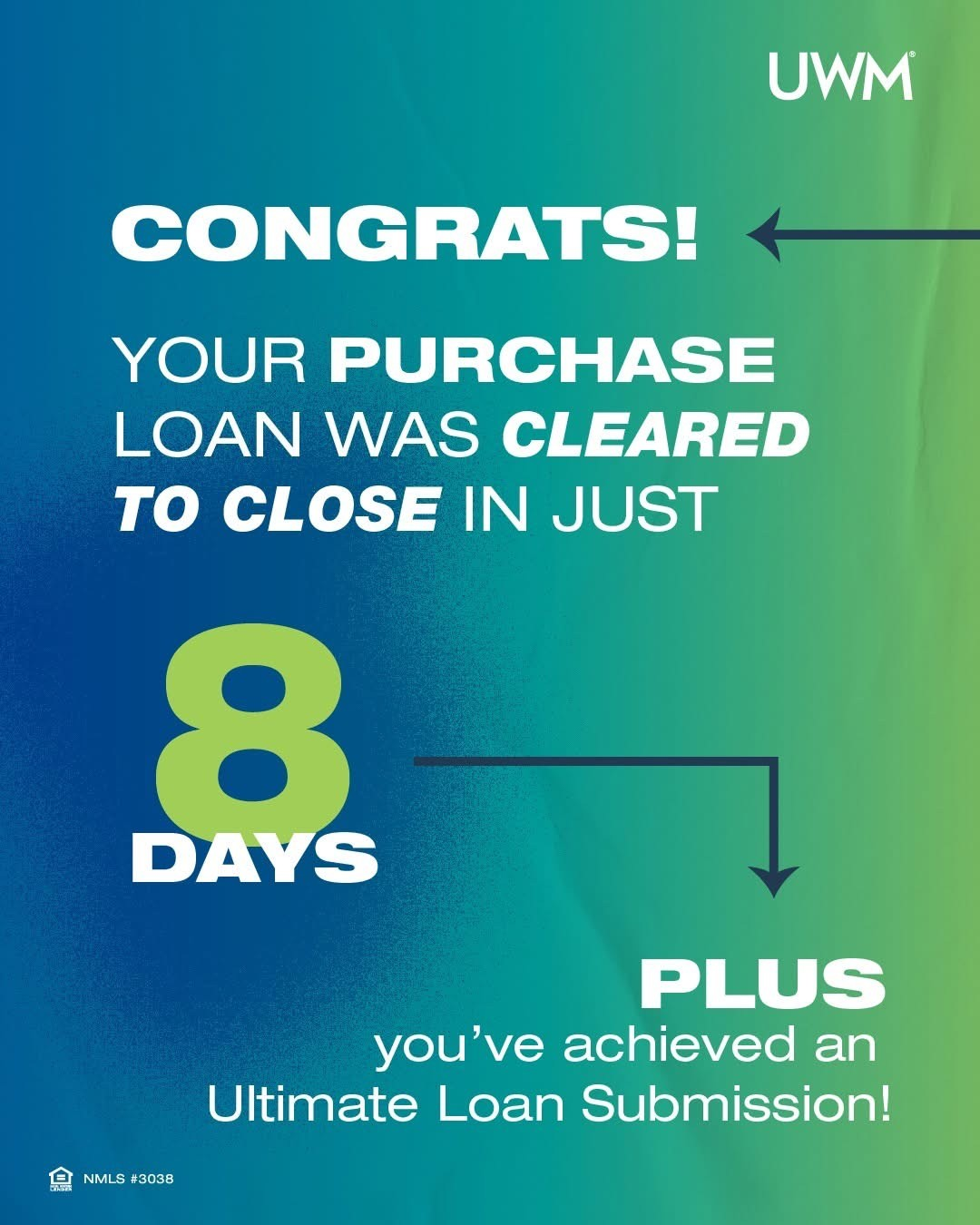
A documented Michigan VA purchase received the lender’s “Ultimate Loan Submission” recognition. The linked case study explains its underwriting and clear-to-close milestones.
Recognition from the lender on the documented VA purchase. Individual loan results and closing times vary.
That result began with preparation: a complete submission, strong upfront documentation, quick communication and attention to the next step before it became urgent. It is an example of what focused execution can look like—not a promise that another transaction will follow the same timeline.
Every borrower, property, appraisal, title file and underwriting decision is different. No mortgage professional can responsibly guarantee a specific approval or closing time. My standard is to identify potential problems early, communicate with the people involved and keep the file moving wherever the facts allow.
VA financing is not limited to a first home purchase.
Eligible borrowers may use a VA-backed purchase loan for qualifying primary-residence transactions. Depending on the property and current rules, eligible uses may include certain single-family homes, multi-unit properties, VA-approved condominiums, manufactured homes, new construction or a purchase combined with improvements.
Borrowers with an existing VA loan may also have refinance options. An Interest Rate Reduction Refinance Loan, or IRRRL, may be available in qualifying situations to refinance an existing VA-backed loan. A VA-backed cash-out refinance can serve a different purpose and requires a careful comparison of equity, new loan balance, costs and long-term benefit.
Refinancing does not automatically save money. We should compare the new payment, interest rate, costs, break-even period and the reason for refinancing before deciding whether it makes sense.
VA loan questions
Frequently asked questions.
Who may be eligible for a VA-backed home loan?
Eligibility depends on service history and duty status. Veterans, active-duty service members, certain Guard and Reserve members, and some surviving spouses may qualify. The COE confirms benefit eligibility; the lender separately reviews the borrower, occupancy, property and loan.
Can I buy with no down payment?
Possibly. Eligible borrowers may be able to purchase with no down payment when the price does not exceed appraised value and entitlement, qualification, lender and program requirements are met.
Does a VA loan require monthly mortgage insurance?
VA-backed purchase loans generally do not require monthly PMI or FHA-style MIP. A one-time funding fee may apply unless you qualify for an exemption.
Is the VA appraisal a home inspection?
No. It estimates market value and reviews readily apparent minimum property requirements. Buyers should consider an independent home inspection.
Can the seller help with closing costs?
VA rules permit certain seller or builder credits. Separate seller concessions are generally limited to 4% of the home’s reasonable value. The specific transaction must be reviewed.
Can I use my VA benefit again?
Often, yes. Prior entitlement may be restorable and some borrowers have remaining entitlement. We should review the current COE before making assumptions.
How quickly can a VA loan close?
There is no universal timeline. Documentation, appraisal availability, property condition, underwriting and title work all matter. Preparation can reduce avoidable delays, but timing cannot be guaranteed.
Should a first-time buyer consider VA financing?
Yes, if eligible. First-time buyers can use VA financing, but it should still be compared with the full payment, closing budget and available alternatives. Visit the first-time buyer guide.
Talk with Mike
Start with your service history, goals and transaction.
You do not need to understand entitlement calculations or know which documents to request before calling. Tell me what you are trying to accomplish, whether you have used the benefit before and where you are in the home-buying process. I will help organize the next steps and explain the available path.
Mike Alkema Mortgage Loan Originator | Leeward Point Mortgage LLC Grand Rapids, Michigan Call or text 616-319-1640
Mike Alkema · NMLS #642953 Leeward Point Mortgage LLC · Company NMLS #1823590 Licensed to do business in the State of Michigan · Equal Housing Opportunity
Important: This page is educational and is not affiliated with or endorsed by the U.S. Department of Veterans Affairs. It is not a promise of approval, rate, terms, savings, closing time or program availability. Eligibility, entitlement, rates, fees, loan terms and property acceptance are subject to current VA requirements, lender guidelines and borrower, property and underwriting approval.
Discuss your service eligibility, planned occupancy, funds for closing and the condition of the home. Eligibility for the benefit and lender approval are separate steps. Mike can help you identify the questions to resolve before an offer.
Condos, entitlement and the way you plan to use the home
For a condo purchase, check whether the project is VA-approved before treating an attractive listing as a financeable VA property. A VA purchase loan is intended for an eligible home you will occupy; an investment-only purchase needs a different financing conversation. Review the VA purchase-loan rules and bring the project name to the initial review.
A previous VA loan does not automatically prevent another use. Available entitlement, whether the earlier loan was paid off or remains outstanding, and restoration rules affect the next transaction. A Certificate of Eligibility and lender review help establish what applies to your file.
Seller credits are not all treated the same
VA distinguishes ordinary closing-cost credits from seller concessions. VA limits concessions to 4% of the home’s reasonable value, while ordinary closing-cost credits are treated separately. Structure the requested help around actual allowable costs rather than assuming a flat percentage covers everything. Review VA’s funding-fee and closing-cost guidance.
By Mike Alkema, Michigan Mortgage Broker · NMLS 642953 · 30+ years of mortgage and real-estate lending experience. Content updated October 7, 2026.
Loan programs, terms and availability depend on the borrower, property and lender. This is educational information, not a commitment to lend. Explore Michigan Mortgage Questions.
Compare your VA mortgage options before you commit
Already have a quote from Veterans United or another lender? Explore Mike’s Michigan VA mortgage comparison and learn which costs to review side by side: rate, points, lender fees, credits and cash to close.