
How a Michigan VA Purchase Reached Clear-to-Close in Eight Days
By Mike Alkema · NMLS #642953 · Page updated
The speed was not based on shortcuts or promises. A complete initial submission, early disclosures, same-day underwriting attention and disciplined follow-through helped move this purchase from underwriting submission to clear-to-close between June 4 and June 11, 2026.
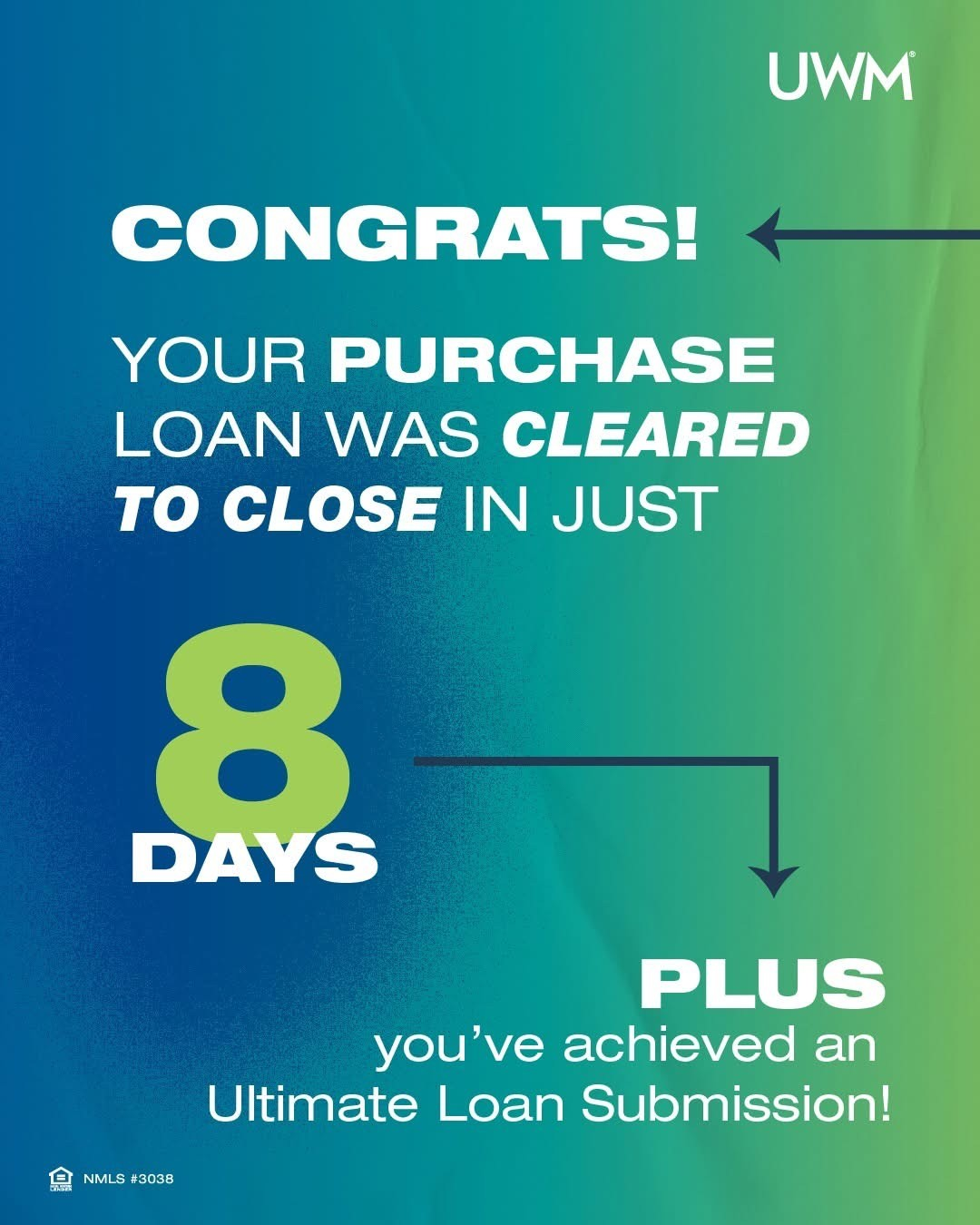
Clear-to-close eight days after submission.
This Michigan VA purchase loan was submitted to underwriting on June 4, 2026. It received an approval with conditions the same day and reached clear-to-close on June 11. The lender also recognized the file as an “Ultimate Loan Submission.”
What happened during the eight-day underwriting window.
Loan setup
The borrower’s application and loan file were created, allowing the mortgage process and required disclosures to begin.
Disclosures issued
The initial mortgage disclosures, including the Loan Estimate, were issued so the borrower could review anticipated loan terms, payment and closing costs.
Intent to proceed
After reviewing the initial information, the borrower confirmed that they wanted the lender to continue processing the application.
Submitted to underwriting
The completed application and supporting documentation were formally delivered to the lender’s underwriting team for review.
Approved with conditions
The underwriter approved the loan subject to completing or verifying specific remaining items. The same-day decision reflected the quality and completeness of the submission, but it was not yet the final clear-to-close.
Initial Closing Disclosure sent
The lender sent the preliminary final loan terms and closing costs, allowing the disclosure timeline to move alongside the remaining underwriting work.
Closing Disclosure received
The borrower’s receipt documented delivery of the Closing Disclosure and allowed the applicable federal review period to run before closing.
Clear-to-close
The lender completed its underwriting review and confirmed that the conditions required to proceed toward closing had been satisfied.
The advantage was a complete submission.
Fast mortgage execution begins before the underwriter opens the file. The objective is to give underwriting a coherent, well-documented application that can be evaluated without spending days identifying basic missing information.
For this loan, the process was organized early enough for required disclosures and the borrower’s intent to proceed to be completed on June 1. The file was then prepared for underwriting submission on June 4.
The result was meaningful: underwriting issued an approval with conditions on the same day the file was submitted. Conditional approval did not mean the work was finished. It created a clear remaining path so the outstanding requirements could be completed, reviewed and moved toward final authorization.
No separate re-submission milestone or revised Loan Estimate was shown as necessary in the lender timeline. The remaining requirements were handled through the lender’s normal condition-review process until clear-to-close was issued.
Speed still requires accuracy and follow-through.
A complete submission creates momentum, but disciplined execution is what protects that momentum. Each milestone has to support the next one: disclosures need to be delivered, the borrower needs to respond, underwriting conditions need to be understood, and the closing timeline needs to be coordinated.
Moving quickly does not mean skipping required reviews. The Closing Disclosure is designed to give borrowers time to review final loan terms and costs before closing. In this transaction, the initial Closing Disclosure was sent on June 4 and recorded as received on June 8 while the underwriting process continued toward the June 11 clear-to-close.
That sequence illustrates a practical principle: tasks that can responsibly move in parallel should not be left until the end. Early preparation reduces the risk that one preventable administrative step delays an otherwise ready loan.
Preparation gives the loan team more room to execute.
Start before the contract becomes urgent
Review VA eligibility, the Certificate of Eligibility, income, assets, credit and the planned cash-to-close early.
Provide complete documents
Missing pages, unexplained deposits or incomplete employment information can create preventable questions and delays.
Respond quickly
When the lender requests clarification or an updated document, a prompt and complete response helps keep the file moving.
Avoid unplanned financial changes
New credit, employment changes or moving funds without explanation can affect underwriting. Discuss potential changes before acting.
Coordinate the complete transaction
The borrower, lender, agents, appraiser, title company and insurer all affect the path to closing.
Understand what the milestones mean
Conditional approval and clear-to-close are different. Clear communication keeps expectations realistic throughout the process.
A fast result is earned one complete step at a time.
This case study does not establish a normal or guaranteed closing time. Every borrower, property, appraisal, title file and underwriting decision is different.
It does show what a prepared file can make possible. When the initial submission is complete and the loan team follows through with discipline, underwriting can spend more time making decisions and less time searching for basic missing information.
Learn more in the Michigan VA loan guide. Real estate professionals with a time-sensitive or difficult file can also visit the Realtor partner page.