
You don’t need to choose a loan before we talk. Start with the home you want, a payment you’re comfortable with and the savings you want to keep. Then we can put the available options beside each other.
What does a real mortgage comparison look like?
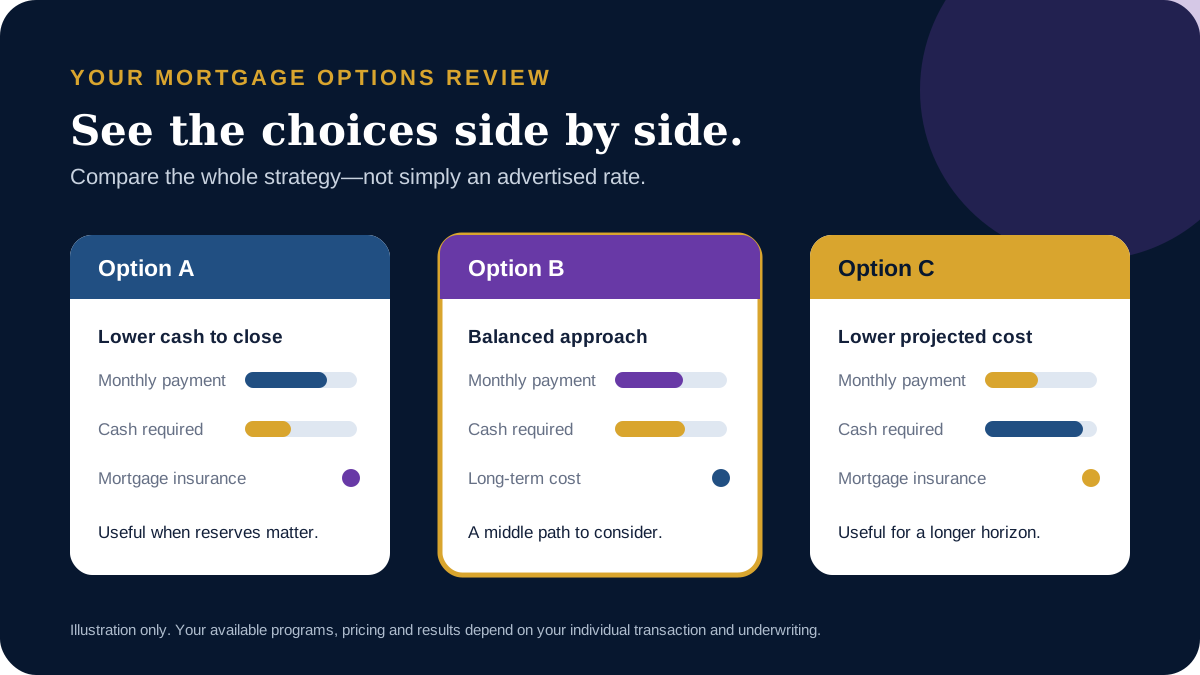
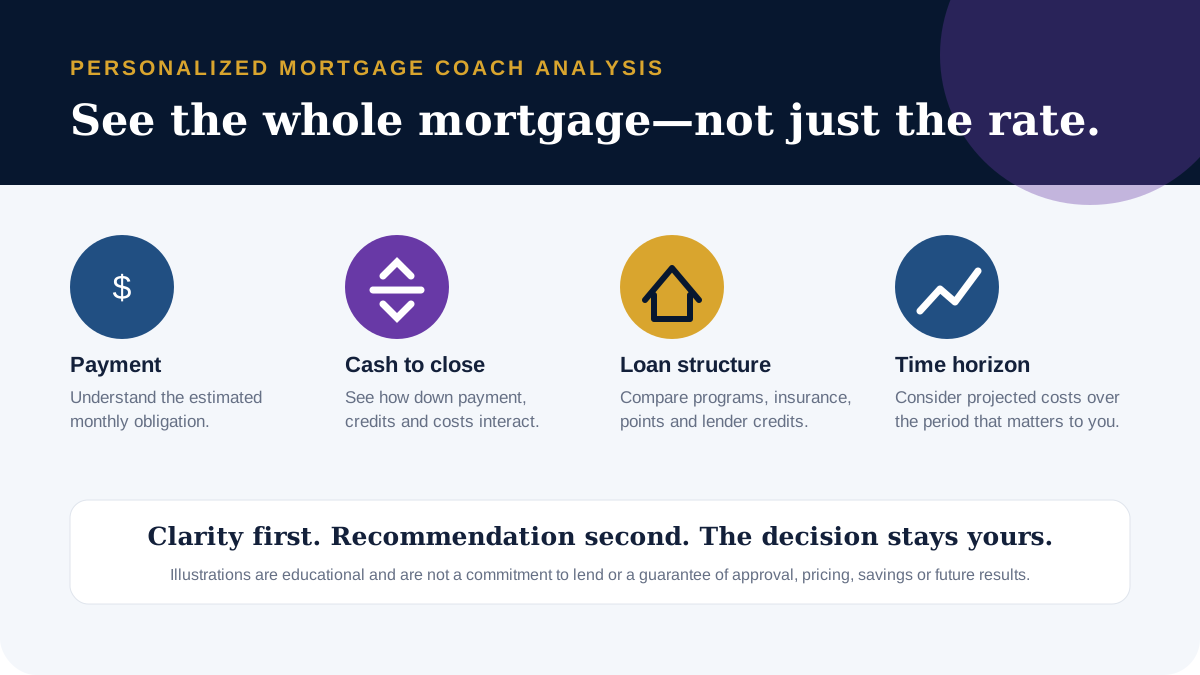
A useful comparison puts the estimated payment, cash to close, mortgage insurance and projected cost of the available strategies in one place. Mike uses Mortgage Coach to make those tradeoffs easier to see and discuss.
The biggest difference
FHA loans are insured by the federal government. Conventional loans are not FHA, VA or USDA loans and may follow Fannie Mae, Freddie Mac or portfolio guidelines. FHA can be more forgiving in some credit and debt scenarios. Conventional financing may provide better mortgage-insurance economics for borrowers with stronger profiles.
Down payment
HUD says FHA down payments can be as low as 3.5% for eligible borrowers. Some conventional programs permit as little as 3% down, subject to eligibility. A smaller down payment is not automatically the best choice: it affects the payment, mortgage insurance, reserves and offer strategy.
Mortgage insurance
FHA generally requires an upfront mortgage insurance premium plus an annual premium paid monthly. Conventional private mortgage insurance depends on factors that can include credit score, loan-to-value ratio and coverage. Conventional mortgage insurance may be removable after eligibility requirements are satisfied. FHA mortgage-insurance duration depends on the original loan structure. This difference can materially change the long-term comparison.
What if your credit isn’t perfect?
My minimum mortgage credit score is 580. A score at or above 580 does not guarantee approval, and some programs and lenders require more. Your income, debts, assets and property still need review. The credit-score guide explains where to start.
FHA may be more workable for borrowers with lower scores or a thinner margin in the debt calculation. Conventional financing can become increasingly attractive as credit, reserves and down payment improve. Lender overlays can apply to either program, which is why a denial or poor quote from one lender does not answer every scenario.
Property and appraisal considerations
Both programs require an appraisal when applicable, but FHA adds HUD minimum-property considerations. A well-maintained home may work under either program. A property with condition issues may require repairs or a renovation-loan strategy. Condominiums, manufactured housing and multi-unit properties have additional rules.
What does the difference look like on a $300,000 home?
In a hypothetical comparison, 3% down is $9,000 and 3.5% down is $10,500. That’s a $1,500 difference. These are down-payment calculations only, not offers or full cash-to-close figures.
Before choosing, put the lender charges, mortgage insurance, tax and insurance deposits, and total monthly payment beside those numbers. Compare the same home and closing date. Include likely post-purchase taxes, not just the seller’s bill.
Then ask: “How much will I have left, and what will this cost if I keep the loan longer than I expect?” A future refinance should not be necessary to make today’s payment workable.
Use the cash comparison at $250,000, $300,000 and $400,000 and the escrow-payment guide to fill in those pieces.
How to compare correctly
Ask for side-by-side numbers using the same purchase price, lock period and assumptions. Compare interest rate, APR, lender charges, mortgage insurance, cash to close and the estimated payment. Then consider how long you expect to keep the mortgage. The CFPB notes that FHA can often be economical for borrowers with lower scores or smaller down payments, while conventional may be less expensive for borrowers with stronger credit and more money down.
Frequently asked questions
Is FHA always cheaper than conventional?
No. Pricing and mortgage insurance depend on the borrower and transaction. Compare both with identical assumptions.
Can a first-time buyer use conventional financing?
Yes. Some conventional options allow eligible first-time buyers to put as little as 3% down.
Which loan is easier to get approved?
FHA may be more flexible in some scenarios, but neither program guarantees approval.
Which is better for a fixer-upper?
The property condition and repair scope may point toward FHA 203(k), HomeStyle or another renovation program.
Authoritative sources
Sources were reviewed September 27, 2026. Guidelines, lender overlays, limits and program availability can change.
Would it help to see the options side by side?
Tell me the home price you’re considering and the question you’re trying to answer. I can help you compare the available choices using the same numbers.
You don’t need to know which loan to ask for. That’s something we can work through together.